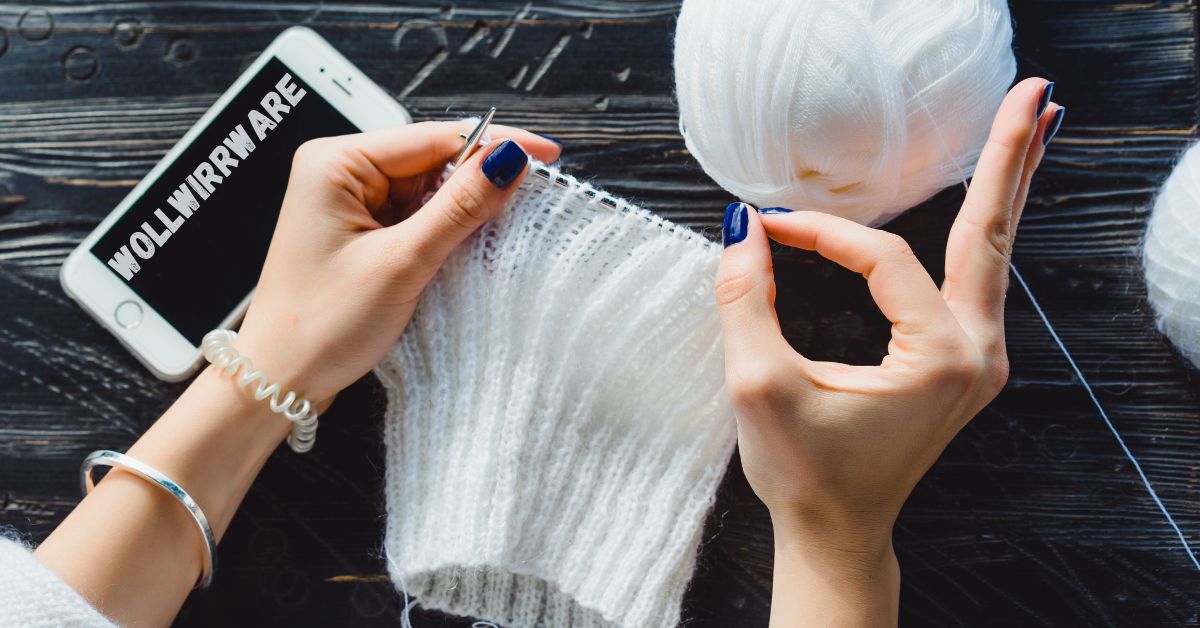
Wollwirrware: Interpreting a Concept of Tangled Wool Goods in Contemporary Textile Culture
The term Wollwirrware does not belong to the established vocabulary of textile science or commercial trade, yet it carries a structure and resonance that invite meaningful interpretation. Rooted in German linguistic elements—Wolle (wool), wirr (tangled or chaotic), and Ware (goods)—the word can be understood as “tangled wool goods” or “chaotic wool merchandise.” While unconventional, such a term offers a compelling entry point into discussions about textile production, material imperfection, sustainability, and the evolving aesthetics of handmade crafts. This article explores Wollwirrware as a conceptual category, examining its possible meanings, practical implications, and cultural significance in the broader context of wool-based materials.
Linguistic Foundations and Conceptual Framing
Compound words are a hallmark of the German language, often used to convey precise meanings by combining familiar elements. Wollwirrware follows this tradition, even if it is not officially recognized. The prefix Woll- situates the concept firmly within the domain of wool, one of humanity’s oldest and most versatile natural fibers. The insertion of wirr introduces a sense of disorder—suggesting tangling, irregularity, or deviation from uniformity. Finally, -ware implies a commercial or utilitarian dimension, indicating goods intended for use or exchange.
Taken together, Wollwirrware may be interpreted not simply as defective wool products, but as items characterized by irregularity—whether in structure, texture, or appearance. This framing shifts the emphasis from flaw to feature, opening the door to a more nuanced understanding of imperfection in material culture.
Wool as a Material: Tradition and Transformation
To understand the implications of Wollwirrware, it is essential to consider the properties of wool itself. Wool fibers, derived primarily from sheep, are prized for their elasticity, insulation, moisture-wicking ability, and durability. These qualities have made wool a cornerstone of textile production for centuries, from traditional garments to modern technical fabrics.
However, wool is also inherently variable. Differences in fiber diameter, length, crimp, and cleanliness can affect how it behaves during spinning, dyeing, and weaving. Even under controlled industrial conditions, wool can produce irregularities such as slubs, uneven thickness, or tangling. In artisanal contexts, these variations are often more pronounced, reflecting the hand of the maker and the uniqueness of the raw material.
Within this framework, Wollwirrware can be seen as a category that embraces these irregularities rather than concealing them.
From Imperfection to Aesthetic Value
Historically, textile production has often prioritized uniformity and consistency, particularly in industrial settings. Standardization enables efficiency, predictability, and scalability. Yet in recent decades, there has been a growing appreciation for materials that display variation and individuality. This shift is evident in movements such as slow fashion, craft revival, and sustainable design.
In this context, Wollwirrware may represent a deliberate aesthetic choice. Tangled yarns, uneven weaves, and irregular textures can create visual and tactile richness that mass-produced textiles lack. Designers and artisans may intentionally incorporate such features to evoke authenticity, craftsmanship, and a connection to natural processes.
For example, a hand-knit scarf made from unevenly spun wool may exhibit subtle variations in thickness and tension. Rather than being considered flawed, these qualities can enhance the object’s character, making it unique and expressive. Similarly, woven textiles that incorporate irregular yarns can produce complex surface patterns that change with light and movement.
Practical Applications and Craft Practices
The concept of Wollwirrware finds practical expression in various forms of textile work. In knitting and crochet, tangled or irregular yarns can be used to create textured stitches and unconventional patterns. In weaving, such yarns may be introduced as weft elements to add depth and variation to the fabric.
Felting, another wool-based technique, is particularly suited to embracing irregularity. By agitating wool fibers with moisture and heat, artisans can create dense, non-woven textiles with organic shapes and textures. The process itself is inherently unpredictable, often resulting in forms that align with the spirit of Wollwirrware.
Recycling and upcycling practices also intersect with this concept. Leftover yarns, tangled skeins, and discarded wool garments can be repurposed into new creations. Patchwork blankets, mixed-fiber rugs, and experimental textile art all exemplify how materials that might otherwise be considered waste can be transformed into valuable goods.
Sustainability and Ethical Considerations
One of the most compelling aspects of Wollwirrware is its alignment with sustainable principles. The global textile industry faces significant environmental challenges, including resource depletion, pollution, and waste. Wool, as a renewable and biodegradable fiber, offers certain advantages over synthetic alternatives. However, its production still involves land use, water consumption, and animal welfare considerations.
By embracing irregularity and reducing the emphasis on perfection, Wollwirrware encourages more efficient use of raw materials. Wool that might be rejected due to inconsistency can be incorporated into products that celebrate its natural variation. Similarly, tangled or leftover yarns can be reused rather than discarded.
This approach supports a circular model of production, in which materials are kept in use for as long as possible. It also fosters a mindset that values resourcefulness and creativity over uniformity and excess.
Cultural and Artistic Dimensions
Beyond its practical and environmental implications, Wollwirrware can be understood as a cultural and artistic phenomenon. Textiles have long served as a medium for storytelling, identity, and expression. The textures, patterns, and techniques used in wool-based crafts often reflect regional traditions and personal histories.
Irregular textiles, in particular, can convey a sense of spontaneity and individuality. They resist the anonymity of mass production and invite closer engagement from the viewer or user. In contemporary art, fiber artists frequently explore themes of disorder, fragmentation, and transformation—concepts that resonate with the idea of Wollwirrware.
Exhibitions and galleries increasingly feature textile works that challenge conventional notions of beauty and craftsmanship. Pieces made from tangled yarns, uneven weaves, or reclaimed materials can provoke reflection on consumption, labor, and the value of imperfection.
Economic and Market Perspectives
While Wollwirrware is not a formal market category, its underlying principles are evident in certain segments of the textile economy. Handmade and artisanal goods often command higher prices due to their uniqueness and the labor involved in their creation. Consumers who seek authenticity and sustainability may be drawn to products that display visible variation.
Small-scale producers, such as independent knitters, weavers, and textile artists, are particularly well positioned to explore this space. By differentiating their work from standardized products, they can appeal to niche markets that value originality and craftsmanship.
At the same time, there are challenges. Irregular products may be harder to standardize, price, and scale. Quality control becomes more subjective, and consumer expectations must be carefully managed. Clear communication about the nature and value of such goods is essential to ensure appreciation rather than misunderstanding.
Reframing Disorder as Opportunity
At its core, Wollwirrware invites a reconsideration of how we define quality and value in textiles. Rather than viewing irregularity as a defect, it encourages us to see it as a source of richness and possibility. This perspective aligns with broader cultural shifts that question rigid standards and embrace diversity—in materials, processes, and outcomes.
The concept also highlights the dynamic relationship between humans and materials. Wool, as a natural fiber, carries within it the variability of the living organisms and environments from which it originates. When artisans work with wool, they engage in a dialogue with this variability, shaping it but also responding to it.
Conclusion
Although Wollwirrware is not an established term, its components and implications offer a valuable lens through which to examine contemporary textile practices. By bringing together ideas of wool, irregularity, and material goods, it encapsulates a philosophy that values imperfection, sustainability, and creative expression.
In a world increasingly dominated by uniformity and mass production, the notion of Wollwirrware serves as a reminder that beauty and meaning can emerge from disorder. Whether in the hands of a skilled artisan or within the broader movement toward responsible consumption, tangled wool goods—real or conceptual—represent an opportunity to rethink how we make, use, and appreciate the materials that surround us.




Post Comment